
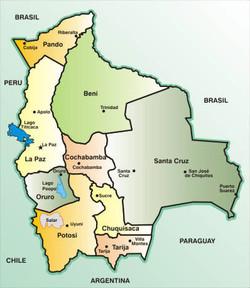
Bolivia’s Path to Enduring Growth: The Impact of IFAD’s Agricultural Programs
Nestled within the diverse landscapes of South America, Bolivia is a country rich in cultural heritage and natural wealth. Despite these assets, it continues to face significant hurdles related to poverty and rural underdevelopment. The International Fund for Agricultural Development (IFAD), founded in 1977, has been instrumental in addressing these challenges by promoting innovative agricultural solutions and empowering rural communities. This article explores how IFAD’s targeted interventions are transforming Bolivia’s agricultural sector while uplifting vulnerable populations, highlighting success stories alongside ongoing obstacles that shape the nation’s journey toward sustainable development.
Bolivia’s Agriculture: Diversity Meets Innovation through IFAD Support
Bolivia boasts a multifaceted agricultural environment shaped by its varied climates and altitudes—from high Andean plateaus to tropical lowlands—allowing farmers to cultivate an array of crops such as quinoa,potatoes,maize,coffee,and soybeans. Conventional farming methods remain prevalent among indigenous communities who integrate ancestral knowledge with modern techniques aimed at preserving biodiversity and soil health.
Key characteristics defining Bolivia’s agriculture include:
- Heritage Farming Practices: Many farmers continue age-old cultivation methods that emphasize ecological balance.
- Indigenous Expertise: Deep-rooted local understanding guides crop choices adapted to microclimates and terrain.
- Cultivation Variety: A mix of native staples alongside commercial crops enhances food security and economic opportunities.
Within this complex setting, IFAD has emerged as a vital collaborator supporting rural development through initiatives designed to overcome barriers faced by smallholder farmers. These programs focus on increasing productivity while ensuring environmental sustainability.
| Programme Area | Description |
|---|---|
| Agricultural Finance Access | Facilitating affordable credit options tailored for small-scale producers. |
| Rural Infrastructure Enhancement | Developing transport routes and storage facilities that improve market connectivity. |
| Capacity Development Initiatives | Sustainable farming training sessions aimed at boosting yields responsibly. |
These efforts not only increase farm output but also empower communities economically while fostering resilience against environmental challenges. Bolivian smallholders are increasingly becoming innovators within their regions thanks to IFAD-backed support systems.
Empowering Smallholder Farmers: Investments Driving Capacity Building & Eco-Pleasant Practices
Targeted investments in Bolivia’s small-scale farms have proven transformative for rural livelihoods by enhancing both skills and resources necessary for improved production. Core components include:
- Financial Inclusion: Microcredit schemes enable access to quality inputs like seeds and fertilizers essential for higher yields.
- < strong >Educational Workshops:< / strong > Training on sustainable agriculture techniques coupled with market navigation strategies equips farmers with practical tools.< / li >
- < strong >Infrastructure Upgrades:< / strong > Enhanced irrigation systems combined with better road networks facilitate efficient distribution channels.< / li >
< / ul >Sustainability remains central; eco-conscious approaches help conserve biodiversity while securing long-term productivity amid climate variability—a critical concern given Bolivia’s vulnerability to changing weather patterns.
Recent data underscores the positive impact of these investments:
KPI Metric Status Before Intervention Status After Intervention (2023) < td >Farmers Trained< / td >< td >50< / td >< td >350< / td > tr > < % Income Increase< / –< / tr > tbody > table > Advancing Food Security Through Partnerships & Forward-Looking Policies
Bolivia has made commendable progress toward food security by leveraging multi-stakeholder collaborations involving local producers, government agencies, NGOs, and international bodies like IFAD. These alliances promote sustainable agriculture practices directly impacting food availability across vulnerable regions.
Key focus areas include:
- < strong >Knowledge Exchange:< / strong Providing continuous farmer education improves agronomic skills leading to better harvests.< /li >
- Building Resilient Rural Communities: Strategic Recommendations for Success
To truly empower Bolivia’s countryside,a holistic approach blending traditional wisdom with modern innovation is essential.Governments,NPOs,and community leaders must unite around shared goals.The following recommendations can guide effective implementation:
Area Of Focus Recommended Action Education Localized training focused on agroecology & entrepreneurship Technology Expand mobile/internet infrastructure access Cooperatives Support formation & strengthening of producer alliances Monitoring Implement systematic evaluation frameworks Looking Ahead: Sustaining Progress Through Bolivian–IFAD Collaboration
The partnership between Bolivia and the International Fund for Agricultural Development exemplifies a steadfast commitment toward eradicating rural poverty while bolstering food security across one of South America’s most ecologically diverse nations.By empowering small-scale farmers through capacity building,sustainable practice promotion,and infrastructural improvements,IFAD plays an indispensable role in reshaping livelihoods.As climate change intensifies social inequalities,the ongoing collaboration offers promising pathways rooted in innovation,inclusivity,and environmental care.Bolivia stands poised not only to enhance its agricultural productivity but also build resilient communities where prosperity benefits all generations equitably.